From Assumptions to Action: How Governments Are Using Agrograph to Improve Water Quality
Agrograph
·
June 06, 2025

by Mutlu Özdoğan
October 28, 2025
For all the energy surrounding biologicals and biostimulants, the industry is still searching for its breakthrough moment. The science is compelling: products that enhance water use, improve nutrient efficiency, and help crops perform under pressure should be a no-brainer in today’s farm economy. Yet adoption lags. Why? Because the problem isn’t just whether biologicals work—it’s knowing where and when they work best.
Farmers live with uncertainty. A neighboring field might thrive while another, just down the road, suffers catastrophic loss. Heat, drought, pests, or disease don’t arrive uniformly. And timing is just as critical as geography—a hot, dry spell during reproductive stages can slash yields far more than the same conditions earlier in the season.
Blanket applications, the standard approach in crop inputs today, miss this reality. Biologicals get applied everywhere, and as a result, their true value is obscured. Agrograph is flipping that model on its head with field-level risk assessment that pinpoints where biologicals will generate the greatest return.
Agrograph’s platform integrates remote sensing, agronomic modeling, and financial analytics to create detailed stress maps at the field level. These insights allow input companies and growers to:
The result is a strategy shift: instead of pouring more product across more acres, companies and growers can move inputs to the right fields, at the right times, for the right reasons.
Consider the stakes: temperature spikes of just one degree can cut maize yields by more than 5%, which is enough to wipe out a season’s margins. Weeds left uncontrolled can strip tens of billions of dollars in U.S. corn and soy revenue annually. Diseases and pests carve away billions more. When multiple stresses collide, losses escalate quickly.
Agrograph turns these risks into actionable intelligence, enabling biological companies to position products where yield protection translates directly into profit.
Biologicals have sometimes been dismissed as “snake oil,” largely because they’ve been tested and sold without precise placement. Agrograph helps change the narrative by embedding biological performance into a framework of measurable, testable outcomes. Instead of anecdotes, companies and growers get data-driven predictions that can be validated in the field.
This is how a promising category evolves into a trusted cornerstone of modern agriculture: through evidence, precision, and economic alignment.
The future of biologicals won’t be defined by who formulates the best product, but by who deploys them most intelligently. The companies that embrace field-level risk assessment will set the pace for adoption, profitability, and farmer trust.
Agrograph is building the bridge between the promise of biologicals and their practical impact. Stress isn’t uniform across space or time—and our solutions shouldn’t be either.
Mutlu is trained as a geographer and has over 15 years of experience processing remotely sensed observations for agricultural and natural resource management applications. He is currently a faculty member at UW-Madison and has extensive links to industry, farmers and government agencies. He has Master's of Science from NC State and a PhD from Boston University.
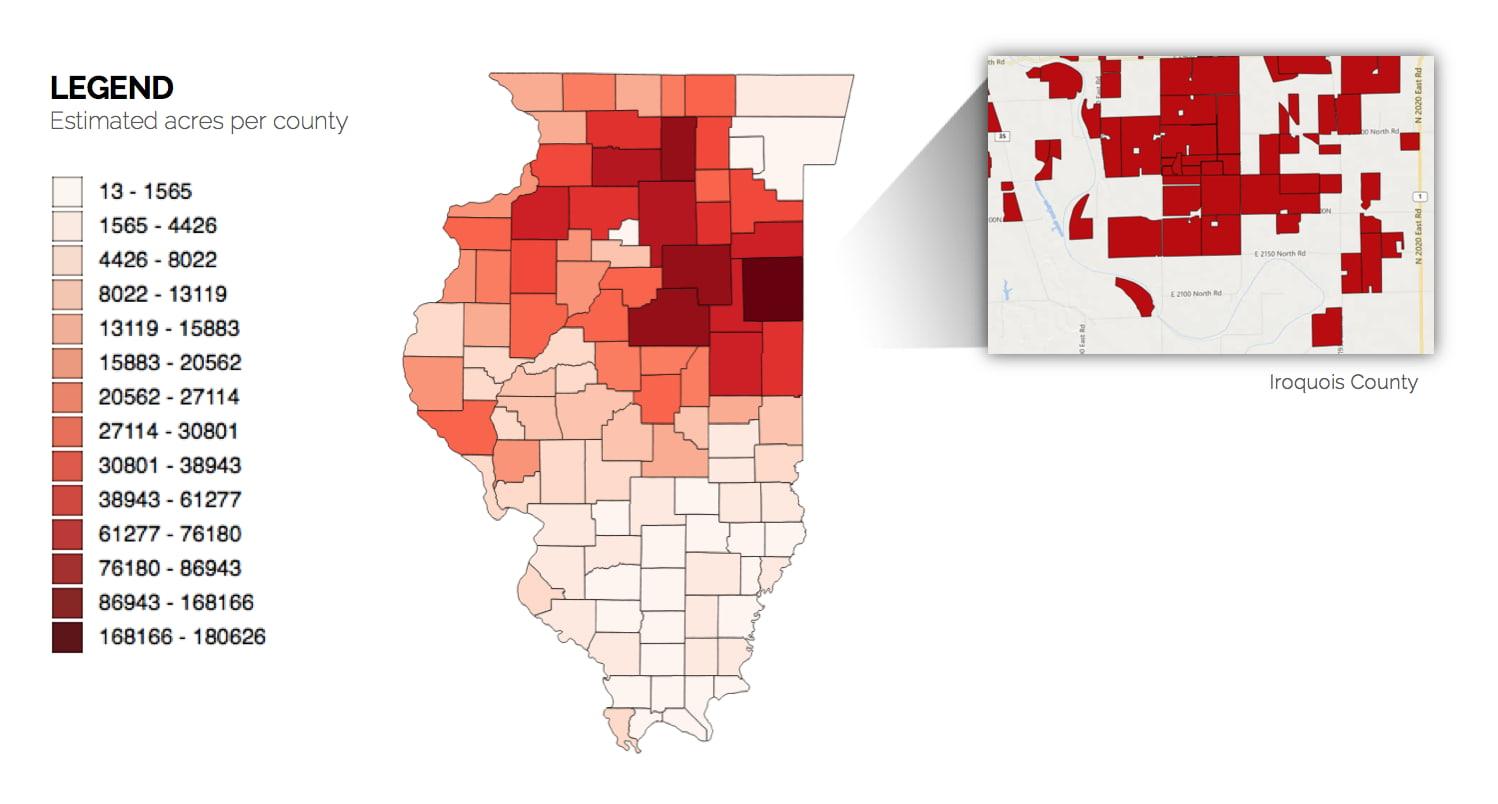
Agrograph’s data platform provides critical information to crop insurance providers, agencies, and adjusters processing prevented planting acreage claims in the Midwest.